

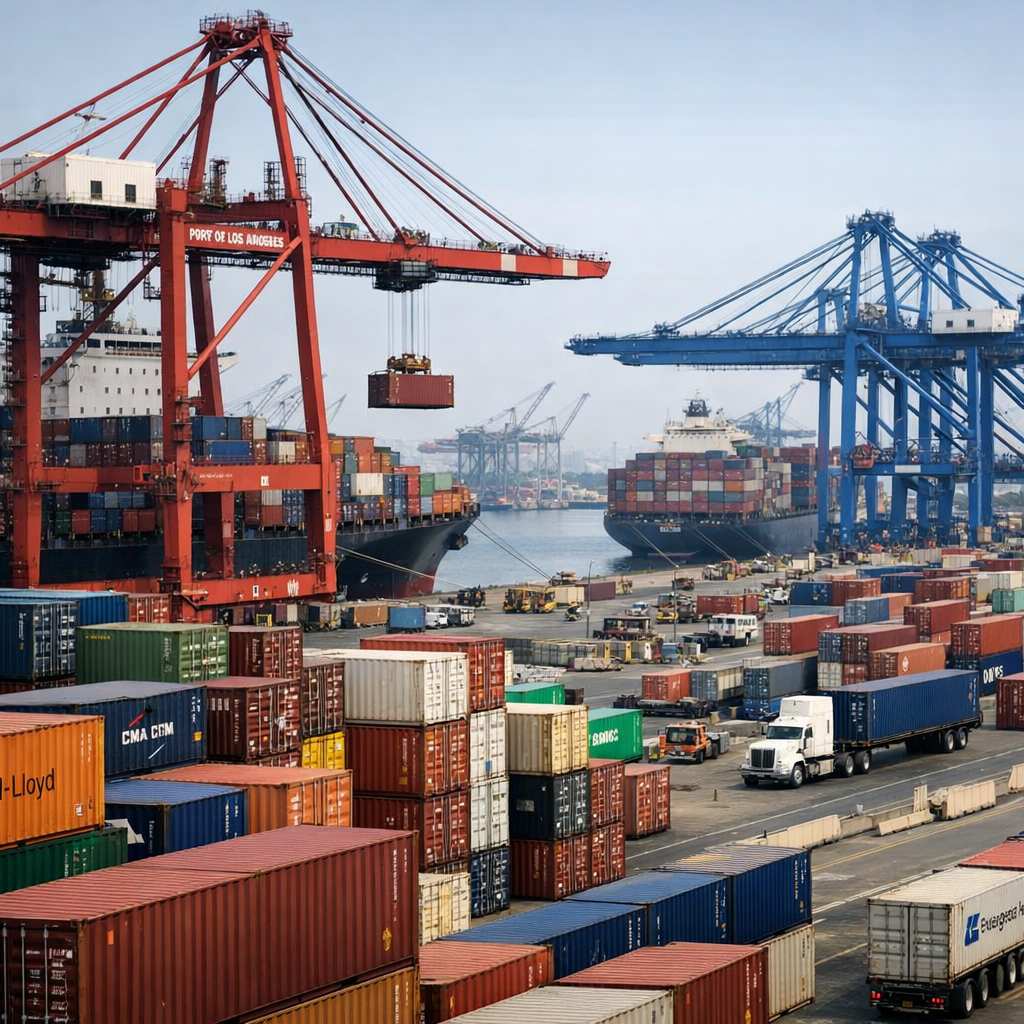
The U.S. economy experienced a slowdown in the second quarter of 2026, with a growth rate of 1.5%, a decline from the 2.1% growth observed in the first quarter. This deceleration is primarily attributed to a surge in imports, which offset robust consumer spending and business investments.
Key Factors Influencing the Slowdown
Surge in Imports
Increased imports have played a significant role in the economic slowdown. While consumer spending rose by 3.2%, the influx of imported goods has negatively impacted the overall Gross Domestic Product (GDP) growth.
Inflation Concerns
Inflation remains a pressing issue, with the Personal Consumption Expenditures (PCE) price index showing a 3.7% year-over-year increase. Core inflation stands at 3.3%, still above the Federal Reserve’s long-term target of 2%. This persistent inflation affects the purchasing power of consumers and the cost structures of businesses.
Geopolitical Tensions
Ongoing geopolitical tensions, particularly the conflict in Iran, have disrupted energy markets and supply chains, leading to increased consumer costs and contributing to the economic slowdown.
Implications for Alexandria Residents
For residents of Alexandria, Virginia, these national economic trends can have local repercussions. The rise in imports and persistent inflation may lead to higher prices for goods and services, affecting household budgets. Additionally, geopolitical tensions can influence energy prices, impacting commuting costs and utility bills.
Looking Ahead
Despite the current slowdown, some economic indicators remain positive. Business investments, especially in artificial intelligence, continue to show strength. However, the Federal Reserve’s stance on interest rates and the resolution of geopolitical conflicts will be crucial in determining the trajectory of the U.S. economy in the coming months.